Decolonisation can be understood as a breaking process that ends any kind of domination. As a result, big powers no longer represent a stronger force over the “inferior”, which can be a territory, a group of people, an individual or even a clothing brand. The main objective is to become independent and self determined in any possible way, and then be able to have a proper voice or style, representing therefore a fair, genuine and emancipated position in the world.
The material and physical aspect of clothes reproduces immaterial signs formatting the encounters for the creation of a fashionable cultural value.

This is central, of course, to the economic value of the fashion network and the ways in which an aesthetic commodity and the model become entangled within, like the cultural valorisation of Kate Moss photographed by Corinne Day for The Face Magazine in the 90 ́s or the Saint Laurent Gang as photographed by Hedi Slimane.


The Relational visibility and scrutiny of appearance gives way to a visible communal sharing of an inferred embodied taste spread in diverse contexts such as fashion blogs, the street, airports or metro stations, with an emphasis on a implicit wearable knowledge in response to the contemporary fashion domination.

Fashion Knowledge is a “fortuitous intersection” (Weller 2007) of a multiplicity of mobile global dominant dimensions. Some of these dimensions are embedded in brand structures and corporate image such as adverts.

Contrary to the notion of Fashion Knowledge, the Démoderne approach is assumed, embodied and enacted by someone who has the ability to perceive and detect the burgeoning material properties of the day, in a “pick and ditch” sense of expressivity that depends upon informal understandings and the intangible taste; in order to look “on the pulse of time” and consequently expose the material potential of this or that outfit to the beholder’s critique.

A stylish look is not stylish without the dialogue produced by the presence of the beholder. Any elegant, tasteful, smart, trendy, chic, hip or fashionable look is defined as a relational object in the material form of clothes, in other words, the effectiveness of an outfit relies on the presence of the beholder and his or her interaction with the material presence of the garments that construct such an outfit.
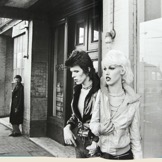
Elegance and edginess dialogue when the explicit materiality that is intrinsic to garments emanates from the implicit knowledge, expressed here as Le Démoderne knowledge which is one step ahead and closer to the emergence of newness and is not subjected to the modern codified baroque of Fashion Knowledge Intelligentsia but instead, relationally, intuitively, wittily, smartly taking advantage by choosing relational garments.
 Research Collective for Decoloniality & Fashion
Leave a comment